
By Angeliki Pesmatzoglou, Instructional Designer, OneLearn Global
Maritime operations are technologically advanced and highly regulated, yet incidents may still happen. This is because systems’ safety and functionality do not depend solely on technology and formal procedures; they also depend on how tools are used and approved protocols are enacted in practice, that is on the human factor.
Human agency at sea is in turn shaped by life at sea, which involves multicultural crews that may often be in isolation or under pressure. As such, seafarers must be equipped not only with strong technical competence but also with well-developed social and interpersonal skills. In this context, effective interpersonal awareness and team interaction are not optional attributes but fundamental requirements. So, what do interpersonal dynamics really mean from a maritime perspective and how do they directly contribute to safety at sea?
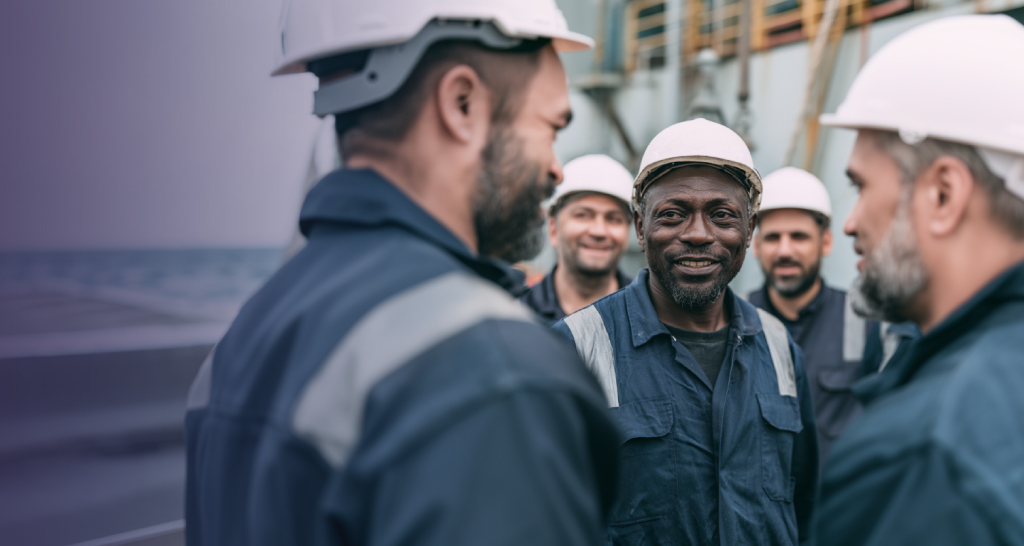
A typical onboard team, composed of crew members from diverse cultural and linguistic backgrounds, offers the potential to enhance problem-solving and broaden perspectives; however, it may also give rise to communication challenges that must be recognised and addressed. To minimise misunderstandings and the risk of conflicts, each seafarer should be able to easily adopt a clear, assertive, and closed-loop communication style while also being aware of differing communication norms, as well as varying attitudes towards authority and teamwork. This becomes especially important in ensuring that critical guidelines and instructions are correctly understood and executed.
The quality of interpersonal interaction is then closely linked to decision making and how decisions are translated into action. While technical knowledge provides the foundation for sound decision making, the ability to share information, voice concerns, and collaboratively evaluate options is equally essential. Breakdowns in these processes have been repeatedly identified in accident investigations, where it is often not a lack of knowledge that leads to failure, but an inability to convey information clearly or challenge decisions within the team.
This is where emotional intelligence emerges as a critical aspect of interpersonal relationships and decision-making processes. Why? Because effective decision making requires one’s capacity to recognise, understand, and manage one’s own emotions, as well as those of others. That is, because emotions influence one’s attention, judgement, and behaviour, they affect how one decides to act across different situations in daily life, particularly in demanding situations characterised by stress, fatigue, or workload as onboard a vessel. A seafarer who is aware of their emotional state is better able to regulate reactions, remain focused, and respond constructively to others. Similarly, the ability to detect emotional cues in colleagues can support cooperation and maintain a positive team climate.
In this light, fostering strong interpersonal awareness and teamwork is not simply about improving workplace relationships; it is a fundamental component of safety at sea. When crew members communicate openly, understand one another, and feel able to speak up, they create a shared situational awareness that supports better decision making and error prevention. Conversely, when interpersonal dynamics are weak, even well-designed systems and procedures can fail. For this reason, the development of soft skills should be seen as an integral part of maritime training and professional competence. Equipping seafarers with the ability to navigate both technical and interpersonal challenges enhances not only operational performance but also the overall safety and well-being of those on board.